24 Mouthwatering Moroccan Foods and Drinks That Will Convince You Book Your Flight ASAP
Sampling the local cuisine was truly one of our favorite aspects of visiting Morocco – the country has a unique, distinct, and delicious culinary tradition. Traditional Moroccan food is warm and hearty, with generous helpings of onions and a delicious blend of spices. The smell of tagine and couscous wafts out of restaurants as you walk down the street.
You can find some of the best traditional Moroccan food in the most unassuming places, and for not that much money! We loved sampling all the new and interesting foods to eat in Morocco – there were a lot of delicious options.
24 Traditional Moroccan Foods You Simply Must Try
Main Dishes
1. Tagine

A tagine cookware is an earthenware dish used to cook meals. It has a shallow base and a cone-shaped top that creates a very hot, moist cooking environment.
The term “tagine” is also used to refer to the meal cooked inside of the tagine dish. A tagine meal will generally include a meat (such as chicken, beef meatballs (aka kefta), or lamb), vegetables (such as carrots, onions, or zucchini), and a variety of spices.
You will often see dishes like “chicken tagine with apricots” or “lamb tagine with prunes.” These variations with the dried fruit are also fantastic!
Tagine is the most common and well-known traditional Moroccan food – you will eat tagine many times on your trip!
A tagine dish is a very practical and fun souvenir from Morocco to bring home with you. You can buy a medium to large dish for around 30 dirham! ($3).
2. Kefta Tagine

Kefta tagine is still considered a tagine (and is served in one), but it’s different enough that I want to highlight it separately. This food in Morocco is meatballs served in a tomato sauce, sometimes with eggs added in.
This ended up being one of the most delicious Moroccan dishes we tried, so don’t skip over it!
3. Couscous

At restaurants, a tagine dish is also often used to cook and serve couscous. Couscous usually comes as either chicken couscous or vegetarian couscous.
While Moroccans usually eat couscous on Friday (their holy day), you can order it in restaurants any day of the week.
4. Briouats

Briouats are flaky Moroccan pastries, filled with savory fillings, and served as a starter. Usually an order comes with 6 briouats: 2 are filled with ground beef, 2 are filled with grated carrots, and 2 are filled with cream cheese (my favorites!)
I loved the briouats and thought they were one of the most delicious things to eat in Morocco!
5. Brochettes

Brochettes are Moroccan kebabs! They are served with rice and veggies on the side, and are delicious and flavorful.
6. Pastilla

Pastilla is a fun dish that is similar to chicken pot pie. A spiced meat mixture is put in the center of phyllo dough, which is then wrapped around the meat. It’s baked, turning nice and crispy, and then sprinkled with powdered sugar and cinnamon.
7. Chicken Sandwiches

You can frequently find meat-filled sandwiches on menus, which are reminiscent of shawarma. Pulled, seasoned meat is stuffed into a crusty bread, with limited other accompaniments.
Here, the sandwiches had tomatoes, but honestly the chicken and the bread is so good that it really doesn’t need anything else!
8. Rfissa

Rfissa is a dish of stewed chicken, lentils, and onions, served on a bed of shredded pastry.
9. Harira

Harira is a popular tomato-based spiced Moroccan soup, with lentils and chickpeas mixed in. It’s warm and comforting soup!
10. Moroccan Crepes

The crepes were easily one of the most delicious foods in Morocco I ate the entire time. Moroccan crepes are eaten for breakfast and are served with a variety of topping choices: generally honey, jams, and butter.
In contrast to typical French crepes, Moroccan crepes are flaky and lightly crispy and are often served in squares. While I don’t normally choose honey as a topping, the honey in Morocco was really, really flavorful and paired perfectly with the crepes.
What to Eat in Morocco: Sides
11. Khobz Flatbread

A tray of flatbread is served with every meal in Morocco, even at breakfast! This flatbread – known as khobz – is crusty and a little bit puffier than, say, naan. We really loved this bread and were not mad to eat it all the time. You can also buy it from little stands on the street for 1 dirham (10 cents USD).
12. Moroccan salad

This chopped salad was reminiscent of pico de gallo, in that it featured fresh diced tomatoes, onions, and peppers, plus herbs and a vinaigrette.
13. Zaalouk

Zaalouk is a cooked Moroccan salad made with eggplant, tomatoes, garlic, oil, and spices. It can be served warm or cold, and is often offered as a small, complimentary starter at restaurants.
14. Olives
A little dish of olives is often set out at meals, with a variety of marinated olives inside. You can also find olive stands in the souks. They are definitely a Moroccan staple!
15. Dates
Date trees are found all over the country, and a bowl of dates is often put out at breakfast time. I’ll admit, I would never usually gravitate towards a plain date, but in Morocco, you simply must sample!
Things to Eat in Morocco: Desserts
16. Chebakia

This dessert is made by shaping long, skinny strips of dough into a flower, frying it, and then brushed with honey and orange water and sprinkled with sesame seeds. It’s a tasty and unique thing to eat in Morocco!
17. Ghoriba Cookies
These cookies are typically sold by a man carrying a tray through the markets of Marrakech. They are crackly on the outside and chewy on the inside, and were actually really delicious! A fair price is 1 dirham per cookie.
18. Oranges with Cinnamon
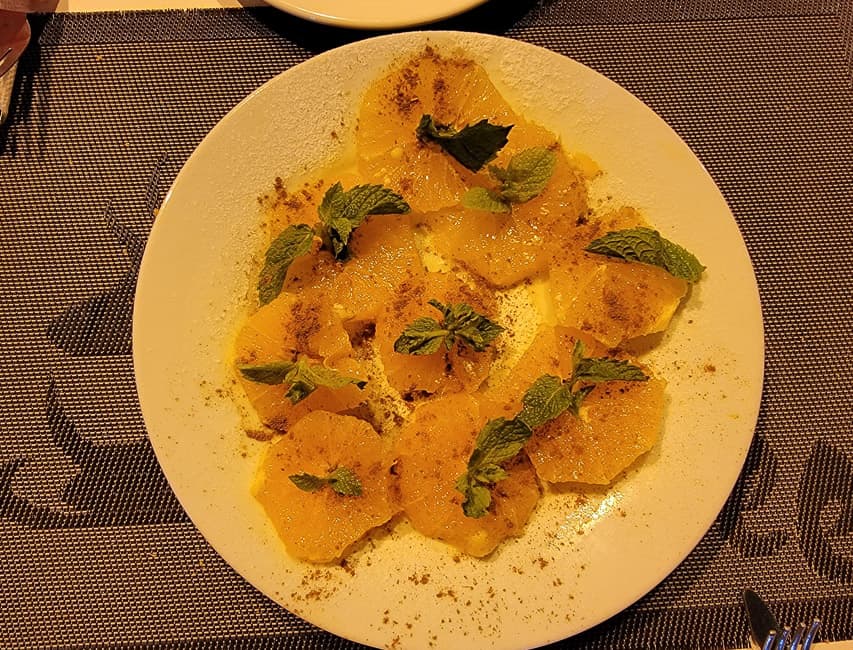
Truly just sliced oranges sprinkled with cinnamon, this Moroccan dessert was nonetheless a refreshing end to a meal and a common dessert to eat in Morocco.
19. Gazelle Horns
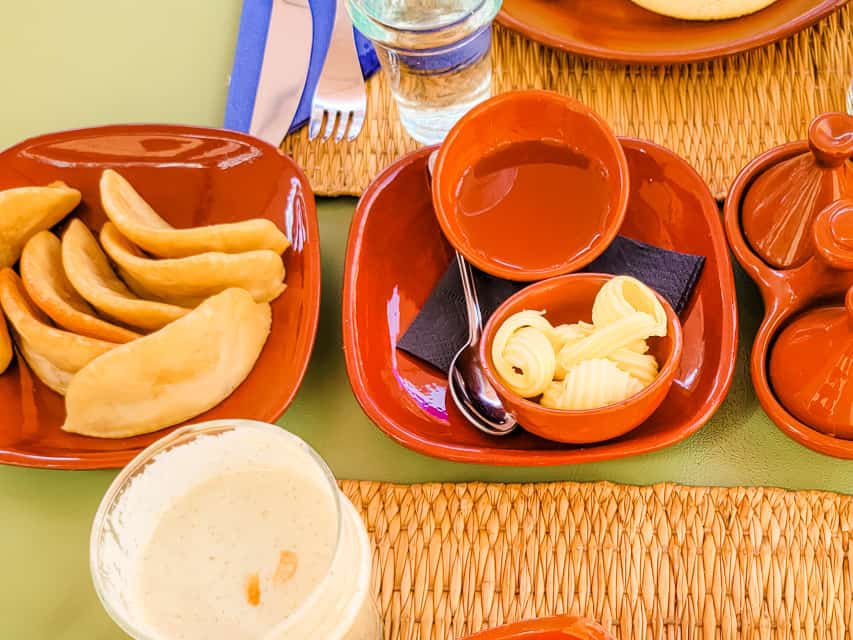
This dessert is a cookie, made with flour, almond paste, and orange blossom water, and shaped into a crescent. These weren’t our favorite treats, but maybe you’ll disagree! They were very popular among the locals.
What to Drink in Morocco
20. Mint Tea

The quintessential Moroccan drink, mint tea is offered when you arrive at your beautiful riad, guesthouse, or even when you arrive in the Sahara, and is also offered as part of every meal. It is made with green tea leaves and fresh mint.
When the tea is brought to your table, your server will pour the first cup for you, raising the teapot high to create an arc of tea down into the cup. This is a really delightful and very common Morocco food tradition.
You can add sugar cubes to sweeten the tea to your liking – Moroccans like it sweet! And the teacups are not an English style teacup – they resemble shot glasses.
We are not green tea drinkers, but still wanted to participate in the mint tea tradition. The people in Morocco were always very accommodating when we asked them if they could make us a herbal mint tea (just the mint steeped in water), which was actually pretty good too!
21. Orange Juice
The orange juice in Morocco was fresh-squeezed and full of flavor, and we got it at almost every meal. Expect OJ to cost anywhere from 10-20 dirhams at a restaurant.
22. Mint Lemonade

The mint lemonade was hands-down my favorite drink in Morocco. Fresh mint is blended into lemonade, and it just tastes so, well, fresh.
23. Pomegranate Juice
We only saw stands selling pomegranate juice a few times, but if you run into one, definitely stop for a drink! They pressed the pomegranates right in front of us, so we were given a cup with 100% pure, straight from the fruit pomegranate juice. And it was delicious.
It was also expensive, at 30 dirhams for a cup, but worth it!
24. Other Juices and Smoothies

You can find a variety of other fruit juices and smoothies at restaurants and on street carts around cities, especially in Marrakech. In Jemaa el-Fna, the main square, there is a whole line of carts selling smoothies and juices and you can pick from a wide variety of flavors.
Some Other Tips About Eating in Morocco
Can You Drink Alcohol in Morocco
Morocco is an incredibly dry country – do not expect to see alcoholic beverages on the menu, and bars are not super common.
Check out my where to stay in Marrakech post for the best areas in Marrakech to find bars.
A Note about French Foods
A French food section? Absolutely. Morocco has a lot of French influence and boulangeries (French bakeries) were fairly common, especially in Marrakesh.
The breads and pastries were high quality but so much cheaper than France – we had an absolutely divine baguette in Chefchaouen that cost 10 cents. Morocco has embraced this food style and made it their own!
Staying Healthy While Eating in Morocco
Food poisoning is a regular concern among travelers heading to Morocco, and indeed, you definitely need to be aware of what and where you’re choosing to eat. While restaurants are generally very safe, street food can cause issues. Choose places that look clean and have food cooked fresh. Be very wary of the stalls in Jemma el-Fna, as they are common culprits for food poisoning in Morocco.
We actually did get food poisoning during our last *hours* in Morocco. In Chefchaouen, we bought this really fun drink from a roadside vendor. He cut up lemons and oranges and then ran them through a machine with a whole stalk of sugar cane. The machine pressed out the juices and the sugar and made a really delicious drink.
Unfortunately, the sugar cane or the fruits must have been contaminated, because Matthew got sick for the next couple days. So, don’t just worry about the meats and cooked foods, also pay attention to the cleanliness of fruit vendors as well!
Some Basics for Eating in Morocco
➡️First, most restaurants in Morocco have at least 3 levels: street level, one story off the ground, and then a rooftop terrace. If there is space on the rooftop, I highly recommend eating up there! The views are beautiful and it’s just so novel eating on a roof.
➡️Second, Morocco uses the dirham. 9.5 dirhams are equal to one USD – we found it most convenient to just estimate 10 dirham = 1 dollar.
➡️Third, tipping: 10% is standard, but double check the receipt first – sometimes the tip is included in the bill.
The Wrap Up
The food in Morocco was truly a journey in its own right. It was flavorful with potent and unique spices, and had contrasting savory dishes with light and abundant fruit. We loved the opportunity to try lots of completely new-to-us dishes — I bet you’ll love that aspect too!